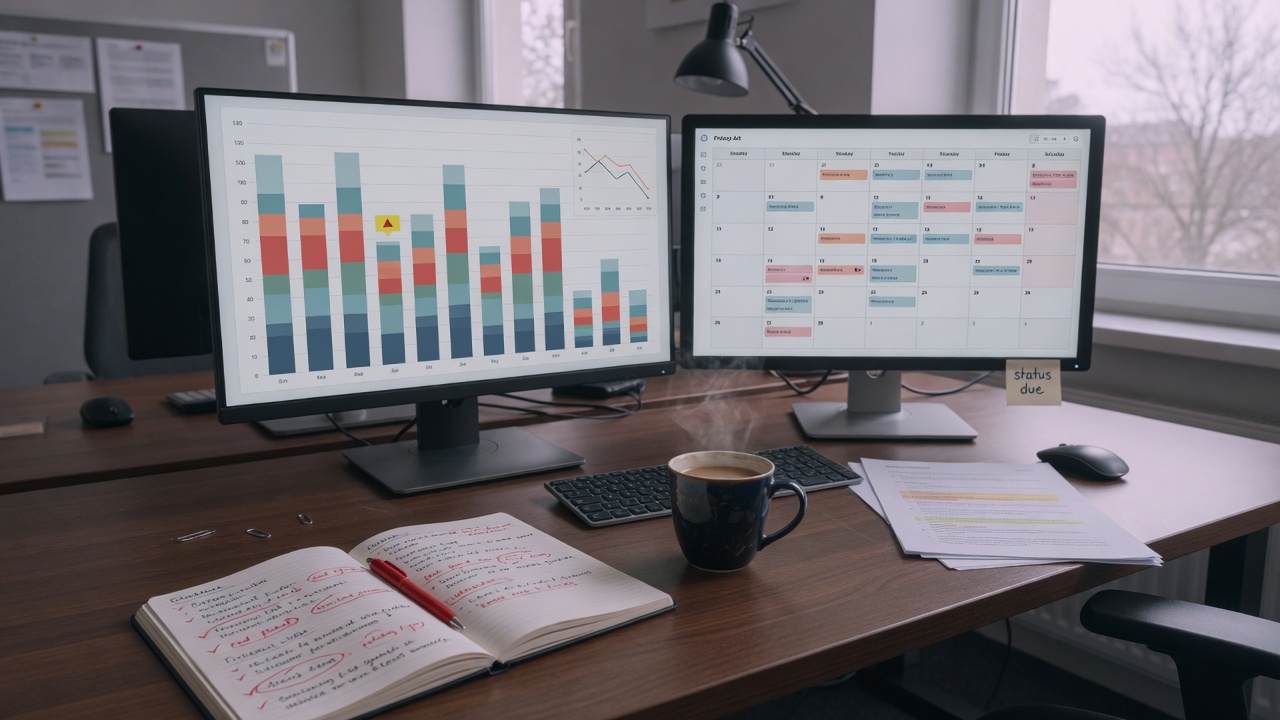
I used to lose half a day every week to status. Not because the project was complex. Because the same facts lived in five places and each stakeholder wanted a slightly different shape. AI did not invent status reporting. It made a boring truth obvious: if your inputs are scattered and your review is lazy, you will produce polished nonsense faster than before.
The fix is a ritual, not a clever prompt. Sources in. Narrative out. Red-flag review. Then send. Meaningful time savings are realistic when the ritual is stable. Zero human review is how you end up explaining a green slide that the team never agreed with.
I keep a fixed folder or note for “status inputs this week.” If it is not in the inputs pack, it does not magically appear in the report as certainty.
Useful when sponsors think in phases, baselines, and approvals.
Ask AI to map your inputs into that skeleton. Then verify the baseline claims. Models will happily invent “on track” if your notes are vague.
Useful when the audience saw a demo or cares about outcomes over Gantt cosmetics.
AI is often good at turning ticket titles into a readable demo narrative. It is less good at admitting that half the “done” work is not releasable. You add that honesty.
If you only skim for grammar, you are proofreading, not managing.
Most status time is re-finding facts and retyping them. A stable input pack kills re-finding. AI kills first-draft typing. Humans keep the judgment minutes, which were always the valuable minutes. The time savings show up when you stop rebuilding the report structure every Friday from memory.
It also helps multi-audience reporting. Same source pack can produce a steering one-pager and a team-facing note. If those two ever disagree on health, stop and fix the truth before you fix the wording.
Traffic lights with no criteria. Green everywhere until the week before go-live. Risk sections that never change. “Issue being managed” with no action. AI can generate all of that fluently. Do not let speed become a cover story.
I would rather send a slightly rough status that names the real blocker than a sleek report that hides it. Sponsors can handle bad news earlier more often than PMs fear. What they hate is surprise.
You do not need a perfect stack. A board, a RAID list, meeting decisions, and a weekly input note are enough to start. If you want a free place to keep Agile or Waterfall progress visible while you build the ritual, see the project tool and the rest of Free Tools. Use what you will actually update.
Status is a service to decision makers. AI makes the service cheaper to draft. Your reputation still rides on whether the story matches the ground. Build the ritual. Keep the red-flag pass. Send fewer, clearer words. That is how reporting gets faster without becoming theatre.
I help PMs and PMOs install a status ritual that saves time and still tells the truth. That can include:
Reach out for a quick chat on how I can help at Suganth@AruviConsultancyServices.com