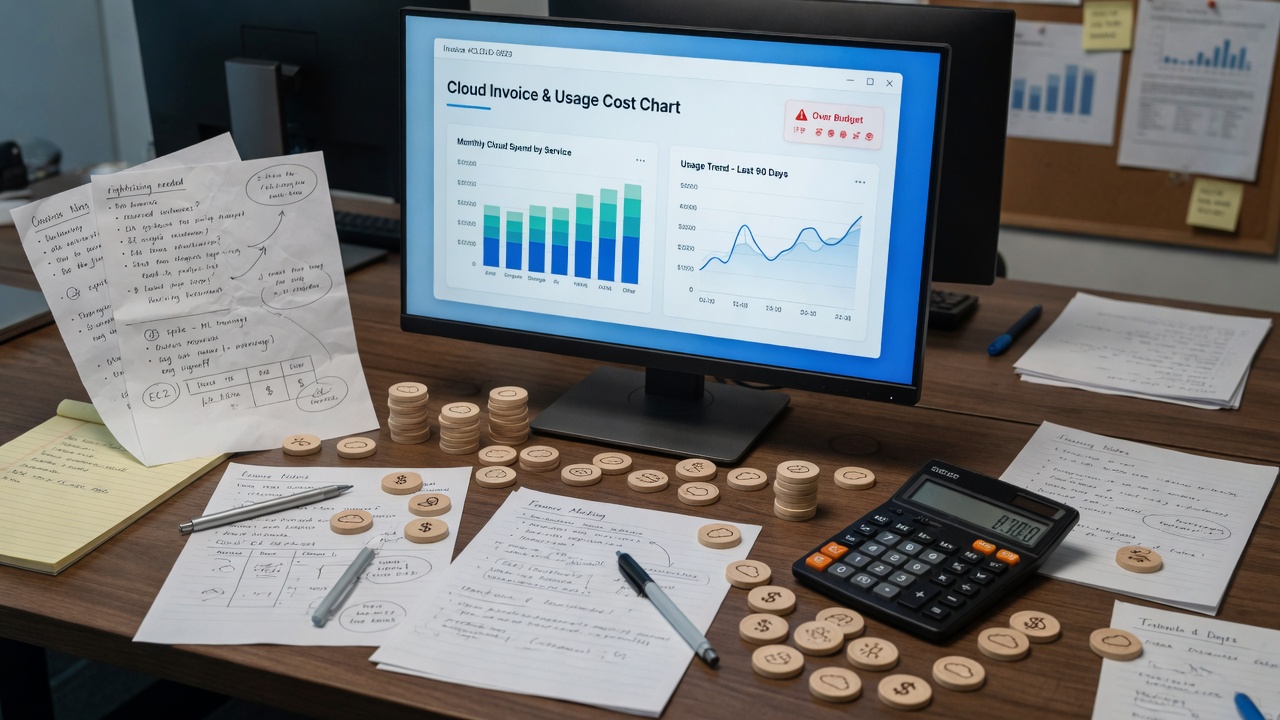
The first invoice after a successful AI demo can be an awkward meeting. Everyone loved the prototype. Finance sees a usage line that jumped for reasons nobody can explain in business terms. I have watched teams treat model spend like free Wi-Fi until the bill arrives.
You do not need a finance degree to manage this. You need a simple model of what you pay for, a definition of a successful outcome, and a few design habits that stop the meter from spinning for no value.
Most hosted language models charge roughly by how much text goes in and how much text comes out. Providers break that text into small units called tokens. Think of tokens as chunks of words or pieces of words. A short email might be a few hundred tokens. A long policy pack plus a long answer might be many thousands.
You pay for both directions: the prompt (instructions, history, retrieved documents) and the completion (the model’s reply). Bigger context windows are useful. They are also a way to spend more without noticing, especially if every request re-sends a huge pile of background text.
You do not need exact token math on day one. You do need to know that “chat a lot with giant attachments” is not free, and that verbose system prompts multiplied by thousands of users add up.
Spikes often come from exploration, not production load:
None of that means the use case is bad. It means the pilot needs a budget, an owner watching the meter, and a stop rule. “We will see how it goes” is not a cost control.
Raw token spend is a weak KPI by itself. Pair it with outcomes you care about:
If spend rises but successful outcomes rise faster, you might still be fine. If spend rises while acceptance rates stay flat, you are paying for thrash: retries, vague prompts, or users who paste everything “just in case.”
This is where process thinking helps. Define the outcome the same way you would for any operational metric, then attribute model cost to that unit of work.
A few patterns tend to help without killing usefulness:
Also watch chat history. Leaving full conversation state attached forever can turn a simple follow-up into a novel-length prompt.
Agent-style features can schedule work, call tools, and loop. That is powerful. It is also how you pay for activity that produces no user-visible value: polling empty queues, re-planning the same failed step, or keeping verbose traces on every tick.
Before you leave an agent running:
An idle or thrashing agent is not “innovation running in the background.” It is a slow leak.
Give them a simple forecast: expected volume, rough cost per outcome, peak pilot spend, and a hard monthly cap with an owner. Share what will be cut first if the cap is hit (nice-to-have features, unlimited free-form chat, non-prod playgrounds).
Surprises destroy trust faster than a higher but predicted bill. Predicted spend with clear value stories tends to survive budget season. Mystery spikes do not.
Practical takeaway: explain tokens as paid chunks of text in and out, track cost per successful outcome, cap retries and agent steps, and keep pilot experimentation inside a budget with a named owner. AI features can be worth the spend. Unwatched usage almost never is.
I help teams design AI features and pilots with cost visibility built in, not added after the first surprise invoice. That can include:
Reach out for a quick chat on how I can help at Suganth@AruviConsultancyServices.com