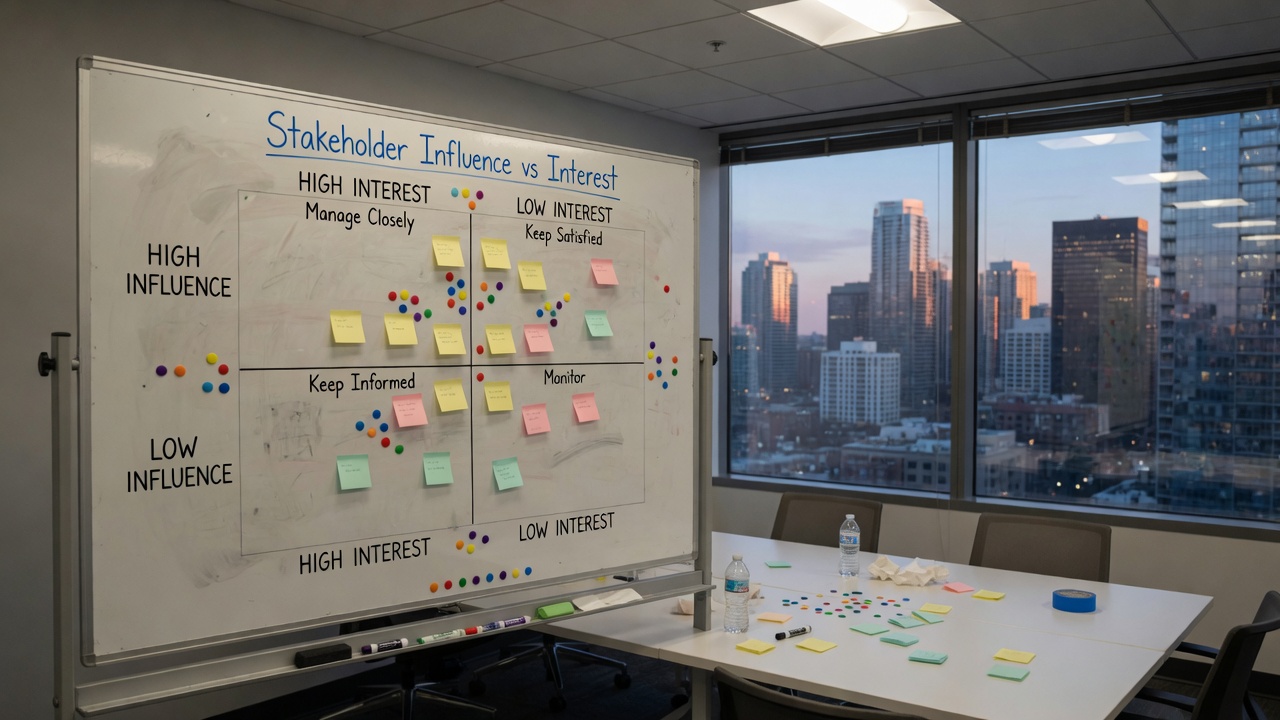
Stakeholder analysis used to mean a two-by-two on a whiteboard, a few names, and a quiet argument about who actually decides. Then everyone took a photo of the board and half the names were still wrong.
Now we also have AI summaries of meetings, email threads, and chat exports. Those can be useful. They can also create a false sense that you "understand the stakeholders" because you have a tidy paragraph about what was said last week. What was said is not the same as who holds power, who is afraid of the change, or who can stop a release with one escalated email.
I still do stakeholder analysis. I just refuse to outsource the political judgment to a summary model.
The classic dimensions still earn their keep:
AI can help list names from a RACI draft or cluster topics from a long thread. It cannot reliably tell you that the quiet finance partner is the one the CFO listens to, or that the loudest champion has no budget authority. That information usually lives in hallway context, prior projects, and careful listening.
Used carefully, summaries can:
I treat those outputs as notes from a junior colleague who was not in the politics. Helpful. Incomplete. Sometimes confidently wrong about tone.
Tone is a particular trap. A short message that looks calm in text might have been a warning. A long message that looks angry might be someone thinking out loud. Models often miss that. So do tired humans, which is why I still prefer a quick confirmation with a trusted person on the ground when the stakes are high.
If you keep project actions somewhere simple, like the free Agile and Waterfall tool, you can tie stakeholder follow-ups to actual tasks instead of leaving them in a slide that dies after kickoff.
Projects fail for technical reasons. They also fail because the wrong person was surprised, or the right person was bypassed. Stakeholder analysis is partly a risk tool for that human layer.
AI summaries can make you faster at the paperwork of attention. They do not give you courage to have the awkward conversation, or judgment about when to escalate, or sense for when "we are aligned" means "I am done arguing in public." Those remain human skills. They are also close cousins of the facilitation and requirements judgment that make BAs useful in AI delivery more generally (I have argued that BA craft maps well to AI work for similar reasons).
When those show up, I shrink the role of the tool and increase the number of real conversations. Sometimes the best "analysis" is a fifteen-minute call with someone who will tell you the truth off the record.
Good stakeholder analysis in this era is a hybrid. Machines help you not lose the thread. Humans still place names on the influence map, choose who needs a private briefing before a demo, and decide when silence from a key person is a risk signal.
Keep the matrix. Keep the communication plan. Let AI draft first-pass summaries and theme lists. Then do the part that never fitted in a template: notice who benefits, who loses convenience, who is accountable when it breaks, and who must trust you enough to say the uncomfortable thing early.
That trust is not generated. It is earned in how you run the work. Summaries can support it. They cannot replace it.
I help project and product teams map stakeholders in a way that is usable under pressure, not just presentable in a kickoff deck. That can include:
Reach out for a quick chat on how I can help at Suganth@AruviConsultancyServices.com