For a couple of years we treated large language models like very smart autocomplete. You type a prompt. It replies. Sometimes you add a system message, a few examples, or a retrieval step. That is the basic setup most of us started with, and for a lot of tasks it still works fine.
“Harnessing” an LLM is starting to mean more than that. Less focus on better prompts alone, more focus on giving the model a reliable way to act: context, tools, memory, permissions, and a product surface people can trust. As a consultant who uses LLMs daily and has pushed them into real delivery work, I keep seeing the same pattern. The engine keeps improving. The teams that win tend to improve the harness.
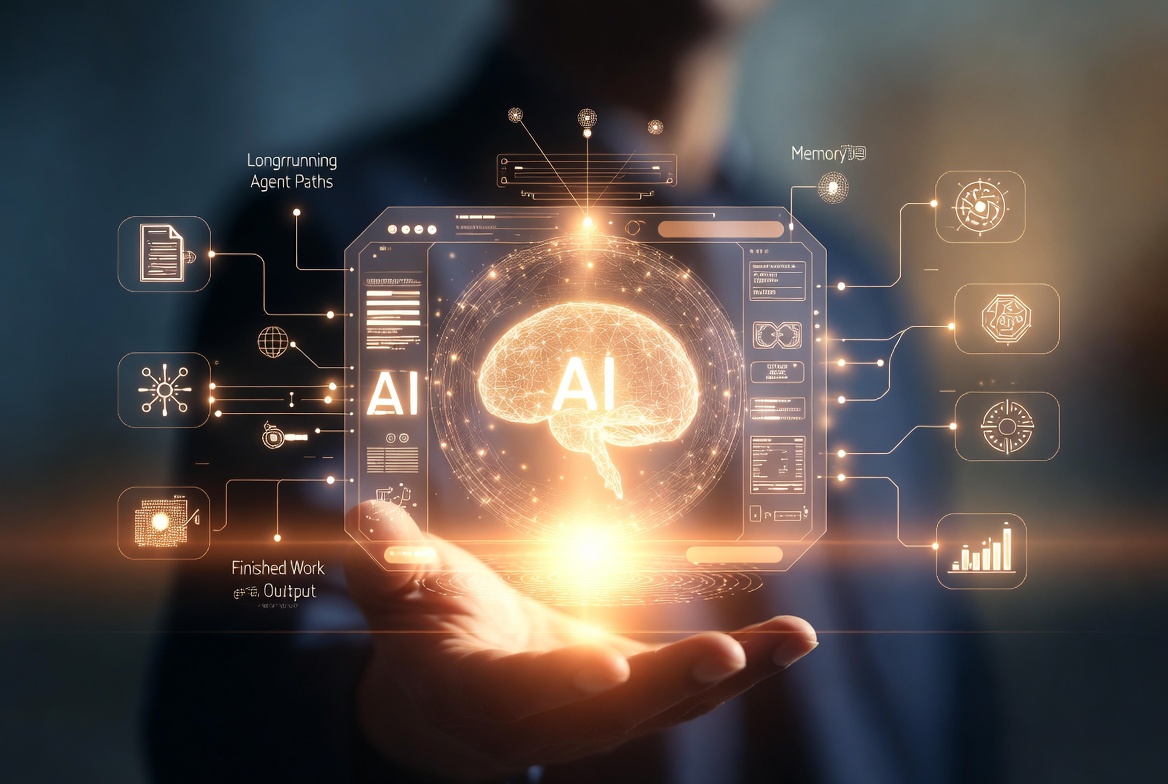
At a simple level, harnessing is everything between the raw model and a useful outcome:
The model is the engine. The harness is the chassis, the controls, the dashboard, and the connection to the road.
For a while the industry focused almost entirely on the engine: bigger context windows, better reasoning, stronger benchmarks. That work continues. Day-to-day gains people feel are often coming from better harnesses, though: how work starts, how tools connect, how long an agent can run, and how a person stays in control without micromanaging every keystroke.
Right now the common patterns look familiar if you experiment seriously with AI at work:
A useful current example is OpenAI’s GPT‑5.6 family (Sol as the flagship, Terra for balanced everyday work, Luna for speed and cost) paired with ChatGPT Work. Work is not only “a smarter chat.” It takes goals and scattered context from tools people already use and turns them into finished outputs while the user stays available for judgment calls. That is a harness story as much as a model story.
Developer tools show the same shift. Codex, Cursor, Claude Code, and similar environments matter because they wrap the model in repository access, terminal actions, review loops, and finished artifacts. A model that only talks about code is interesting. A model that can inspect a codebase, make a change, and leave something reviewable is useful.
Much of this is still reactive. You start the conversation. The agent stays inside a relatively narrow loop. Memory is short. Authority is limited. Most of the real work still happens in the tools people already know.
A few directions look clearer than others.
Not just “answer this question,” but “own this project for the next few hours or days, check in when you need judgment, and hand me a finished result.” Early versions show up in ChatGPT Work, coding agents that stay on task longer, and multi-agent setups that coordinate parallel workstreams on hard problems. For business teams, AI can move from drafting assistant toward delivery assistant, with supervision.
Standards like the Model Context Protocol (MCP) can reduce the cost of connecting models to real systems. Fewer custom integrations often means more capability without building a new plugin every time the model or product changes. MCP is not the whole future on its own, but it signals that the industry wants reusable tool interfaces rather than endless one-offs. Pair that with solid RAG when the agent must answer from your documents, not invent policy.
Instead of re-explaining everything in every chat, agents will likely keep working knowledge of projects, preferences, and ongoing work across sessions. For consulting and delivery teams, that can be the difference between “helpful once” and “useful over the life of an engagement.”
Models that can navigate a desktop, a browser, or an internal app the way a person would (with supervision and permissions) expand what “done” can mean. Drafting a status update is one thing. Opening the source systems, checking the latest numbers, updating the deck, and flagging exceptions is another.
Approvals, editable plans, scheduled check-ins, and the ability to redirect mid-stream. Autonomy without a way to steer is mostly risk. Organizations that scale AI well will probably not remove humans from the loop. They will put people at the decision points that matter and let the harness handle more of the rest.
None of this requires the model to “become conscious.” It needs better scaffolding: reliable tool use, durable context, sensible permissions, and interfaces that let people stay in control without micromanaging every step.
Take a familiar delivery problem: preparing a board-ready operating review from five systems that never quite agree. Today a strong analyst still spends hours pulling extracts, reconciling definitions, drafting the narrative, and cleaning slides.
A better harness does not remove judgment. It changes the workflow. An agent powered by something like GPT‑5.6 Sol inside ChatGPT Work, or a custom workflow on your own stack, can gather approved sources, draft the variance story, assemble a first-pass deck, and queue gaps for human review. The analyst still owns the recommendation. The harness owns more of the grunt work of collection, structure, and iteration.
That is the practical future I care about for clients: less time assembling, more time deciding. Same idea for requirements packs, process maps, migration plans, and prototype software. The value is rarely the model being clever in isolation. It is the system around it taking a goal, using tools, and returning work close enough to finished that real teams move faster.
If you build with LLMs today, a lot of the interesting work sits upstream and downstream of the model itself.
Upstream: how context is collected, how tools are exposed, how authority is granted, how data ownership and compliance are protected.
Downstream: how results become finished artifacts people can use (documents, decks, updates, code, decisions), and how quality is reviewed before anything hits a client or production system.
The model is still the core. The harness is what turns a strong text predictor into something that can take responsibility for a piece of work. That is also why AI initiatives often fail when organizations buy access to a frontier model and stop there. Without process design, data readiness, permissions, and a clear definition of “done,” you mainly get expensive chat.
You do not need a science-fiction roadmap to act. A practical starting set looks like this:
We are early. Plenty of current agents still feel brittle. The direction still looks clear enough: less “ask the AI a question,” more “give the AI a goal and a set of tools, then stay available for the decisions that actually need a human.”
That is what harnessing an LLM is becoming. Not a bigger brain in a vacuum. A better system for putting that brain to work.
I help organizations design practical harnesses around LLMs, not just prompts and model selection. That often includes:
If you want to move from chat experiments to systems that help finish real work, we can start with one concrete process and design the harness around it.
Reach out for a quick chat on how I can help at Suganth@AruviConsultancyServices.com